
Blog #4
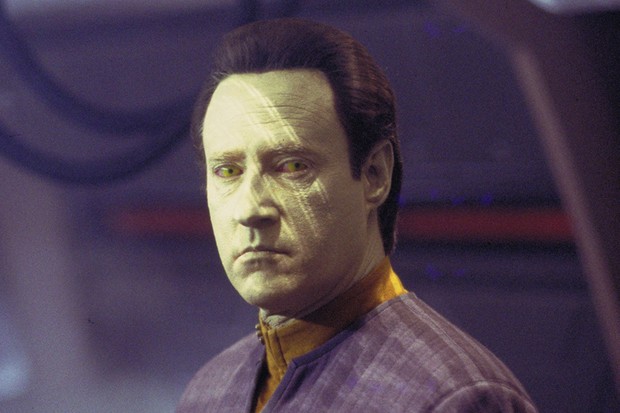
Like other existing voice assistants, Data is an AI machine that is programmed to respond to human interactions. However, Data is significantly different from all voice assisting devices because it has a human form, and can move, act, and talk like a human. More importantly, it has a personality and is a very intelligent machine. It claims to have emotions, feelings, and consciousness. All other machines we have right now are still existed in the form of simple machines, wired to a power source, and don’t seem to have any personalities.
There are different expectations between the android and the voice assistants. The android is expected to look and talk like a human. It is also expected to be able to learn from interacting with humans and improve its intelligence from those interactions. Meanwhile, voice assistants are only expected to help with simple tasks in our daily lives. We don’t expect them to talk like humans or answer deeply complicated questions. Even though I don’t have high expectations from them, when a voice assistant doesn’t understand a question, I still feel frustrated and less likely to ask them those questions again.
The uncanny valley is a theory that describes a “level of realism in artificial life forms in which the human observer has a negative reaction.” In the Star Trek android, Data, situation, because of its life-like form and intelligence, it is easier for the people around it to treat the android like a human. Therefore, it is not surprising for them to feel a negative reaction toward the android. However, with Google, Alexa, or Siri, because they are still in the form of a simple machine or a phone with no personality and a lower level of intelligence, it is less likely for us to encounter the uncanny valley. We have a way lower expectation from them and when they make a mistake, it is more forgivable.
I think the public’s expectations of voice interfaces have evolved to be more realistic than before. With Star Trek, people have high hope and expectation for AI and technology in the future while in fact, until now, we don’t really have any technology that is close to the android. They wanted to have a human-like machine that can evolve itself, but it is not really possible yet for our engineers to make something like that.
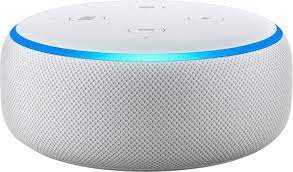
On a scale of 1-10 with 1 being mechanistic and 10 being humanistic, I will rank Alexa at 1. I don’t think Alexa has a life of its own. Alexa is a simple voice-assisting machine that is hard-wired to a power source. Alexa doesn’t have a personality or the ability to have feelings or emotions. I would rank LaMDA at 5 because of its ability to converse naturally and it sounds persuasive enough so if I didn’t know it was an AI, I would think that was a conversation between two people. However, I cannot know if its answers were sincere or not. Besides, it is still in a form of a machine, which makes it less humanistic. Lastly, I would give Data an 8 because of its lifelikeness, intelligence, and how Star Trek crew members feel about it and how they treat it like a human being. Of course, Data is only an imaginary character, so my ranking is based on the information the episode gave me.
I think if you use a voice interface for customer services such as answering a phone call or being a receptionist because this will give the customers more trust in your company and services than talking to a machine voice. However, I don’t think we should give them too much personality such as being too funny to a point that wastes your customer’s time. Voice assistants’ main purpose is to assist users quickly and they should serve that purpose. I don’t want Alexa to give me a joke while all I ask for is how the weather is today or when I ask Siri for direction while driving, I want it to give me the direction, not anything else.
Something I have learned about design for voice interfaces is its core is still user experience (UX) design and we need to design voice interfaces based on user-centered design principles. All the knowledge about UI/UX design and User-Centered design are transferable when designing for voice-assisting devices.
 Mimi Nguyen's Design